Built-in refrigeration · Chicago, IL
The cabinet is not the problem. The circuit that failed is.
Independent Sub-Zero service for built-in refrigerators, freezers, ice makers and wine storage across Lincoln Park, Gold Coast, Lakeview East and Streeterville. Dual-refrigeration cabinets get diagnosed one circuit at a time, under gauges, before anyone quotes you a part.
On site 8:00 am – 8:00 pm, seven days · dispatch answered 24/7
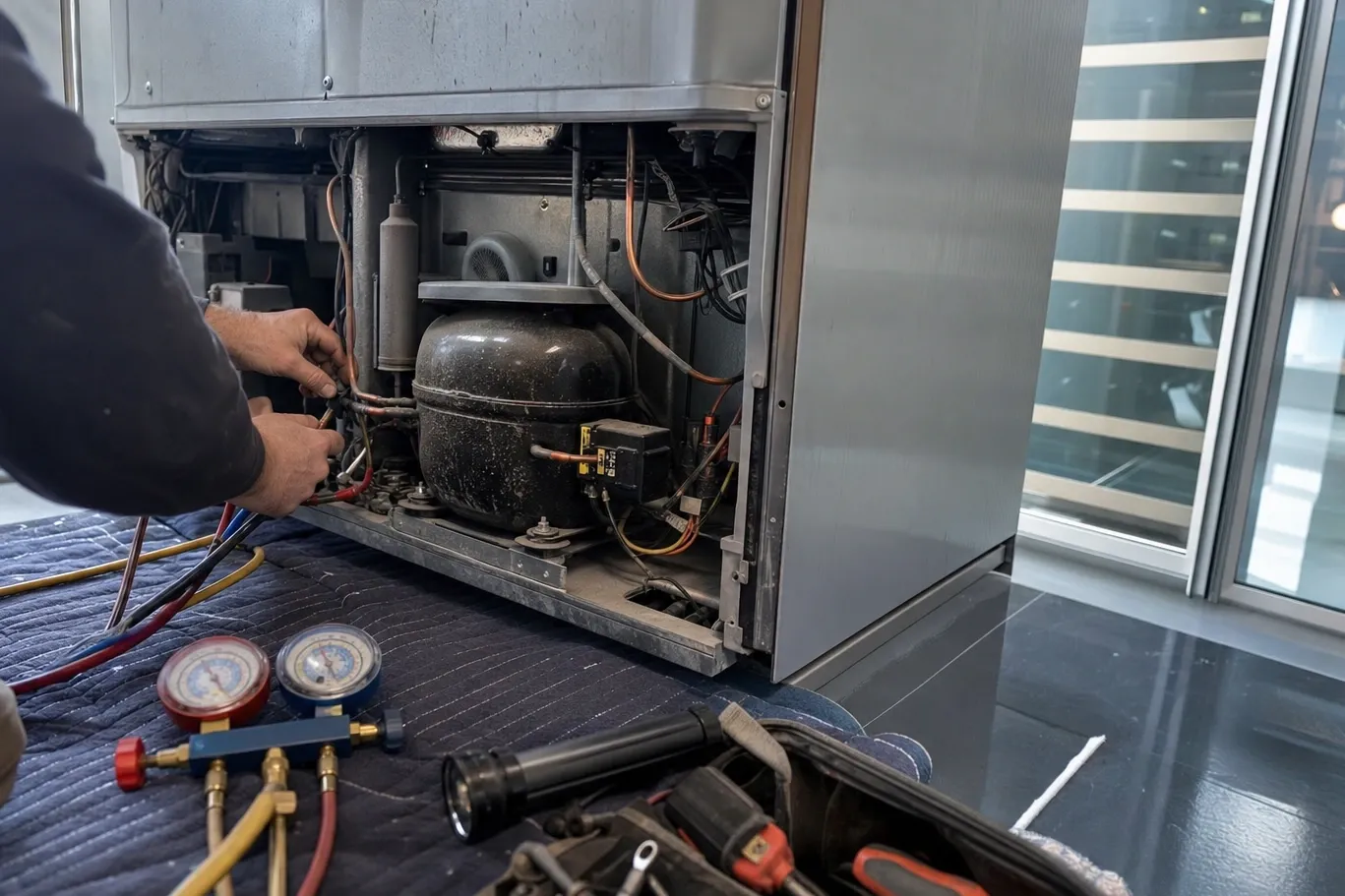
- Dual-refrigeration cabinets diagnosed one circuit at a time
- Sealed system read under gauges, under load
- Firm price agreed before a part is ordered
- Freight elevator and building access arranged by dispatch
Tell us what it is doing, not what you think it is
A description of the behaviour — which compartment, what it reads, when it changed — is usually enough to narrow the fault to two candidates before anyone is on site.
What customers said
Left by people in these buildings
The glass beaded up through a humid week and I assumed the door seal. He measured, and it was the door heater circuit. Sorted, and the collection has sat at its proper temperature since.
Malcolm E. · Streeterville
Bin sat empty for a week with the arm down and the rest of the cabinet perfectly fine. The inlet valve had silted up on our hard water. He fitted a new one and flushed the line back to the tap.
Simone A. · Lincoln Park
Pre-war co-op off Astor, and the service lift has to be booked before anyone can carry a part upstairs. He planned around that, returned with the damper motor the same week, and the column has held since.
Aleksy T. · Gold Coast
What stands behind the visit
Five things that are true before anyone touches your cabinet
Each of these is checkable, and none of them is a number we made up. Where the honest answer is "held but not published" — the licence number — that is what it says.
- EPA Section 608 Certified for refrigerant handling, which is what a sealed-system diagnosis on these cabinets requires before a gauge goes anywhere near a service valve.
- Licensed, bonded and insured Held by the company. The licence number is given to customers on request rather than published, so there is no identifier on this page for anyone to check against the wrong register.
- Factory-spec parts Replacements are ordered against your model and serial. Sealed-system components are never substituted for a close-enough part that happens to be on the van.
- Workmanship warranty The repairs carried out are warranted. If the same fault comes back, the return visit is on us and the diagnosis starts from what we did, not from scratch.
- Written diagnosis What was measured, what it read and what it means is left with you in writing at the end of every visit — including the visits where our answer is that the repair is not worth doing.
Coverage
Four neighbourhoods on one north-side route
The lakefront strip north of the river, kept deliberately tight. A route that can be driven in a morning is a route where the second visit for a part happens this week rather than next.
- Lincoln Park 60614
Greystones and brick three-flats with the kitchen gut-rehabbed around a column that went in before the cabinetry did. Plenty of 1990s and 2000s built-ins still working for a living here.
- Checked first
- Condenser air path and the fresh-food circuit
- Access
- Street parking and a back stair on most three-flats; garden units are a carry down
- Gold Coast 60610
Pre-war co-ops and mansion flats where the kitchen was carved out of rooms that were never meant to hold a 48-inch cabinet. Service runs go through a back stair or a booked freight elevator, not a driveway.
- Checked first
- Door seals, hinges and the defrost circuit
- Access
- Back stair or a booked freight elevator; management offices usually want a certificate on file
- Lakeview East 60657
High-rise kitchens a block off the lake, most of them with the cabinet built tight into joinery. Condensers here work against a room that is humid in August and bone dry once the radiators come on.
- Checked first
- Sealed-system pressures under load, and door heaters on glass
- Access
- Service elevator by appointment; most buildings want the window agreed a day ahead
- Streeterville 60611
Tower kitchens with undercounter refrigeration, ice and wine storage packed along one wall, fed by supply lines that run a long way inside the building before they reach the valve.
- Checked first
- Supply pressure at the valve, then the module
- Access
- Loading dock hours and a booked freight elevator; kerbside is not an option
Repairs
Four cabinets, four different failures
Built-in refrigeration does not fail as one machine. Find the description that matches what yours is doing and the page behind it sets out what gets measured.
-
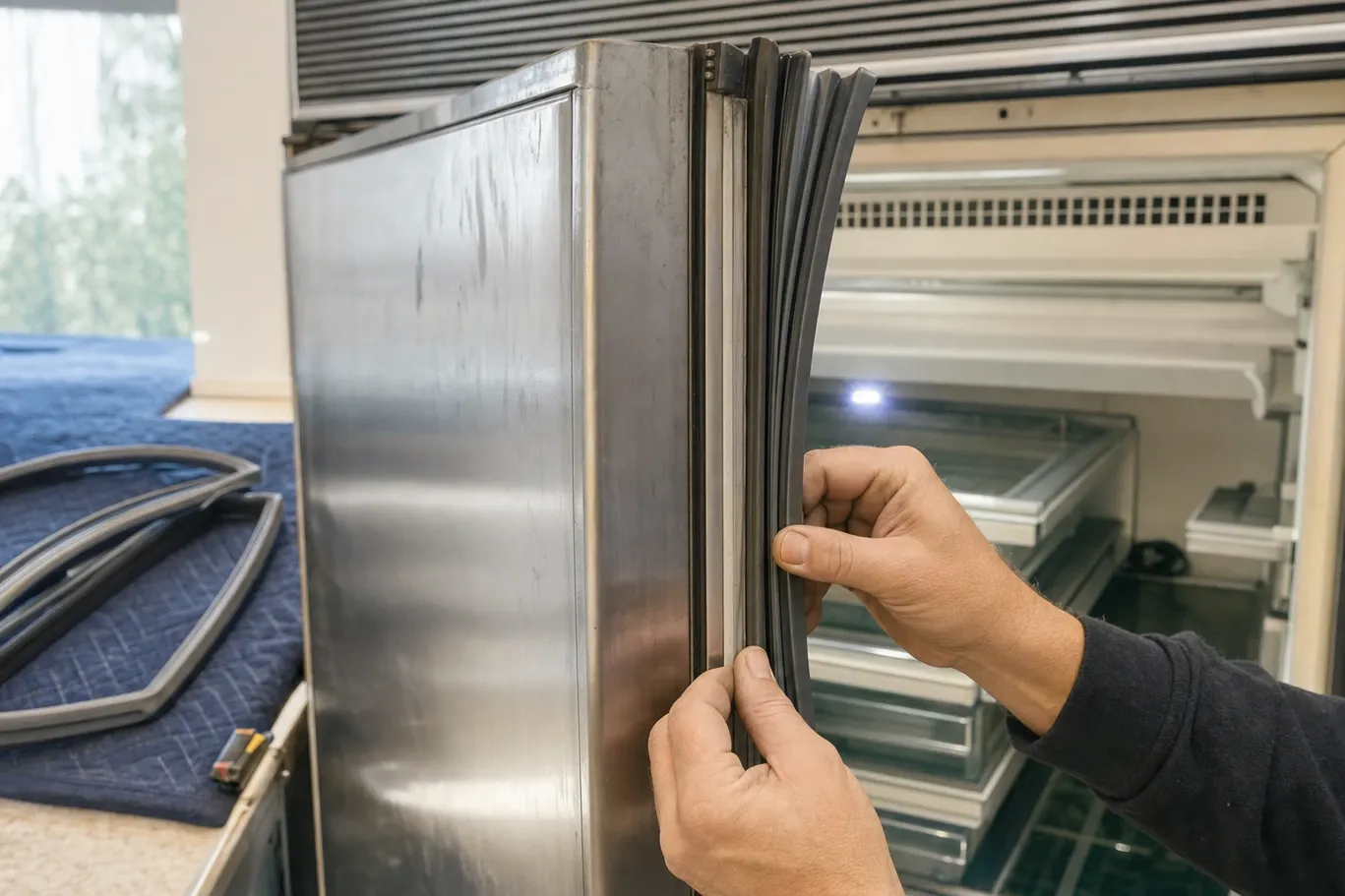 Refrigerator Repair Built-in and integrated fresh-food columns that have stopped holding their number — dual-refrigeration faults, defrost circuits, door seals and the condenser airflow that a boxed-in cabinet loses first.
 - Fresh-food side climbing into the forties while the freezer column still reads zero
- Door that swings back open a finger-width instead of pulling itself shut
-
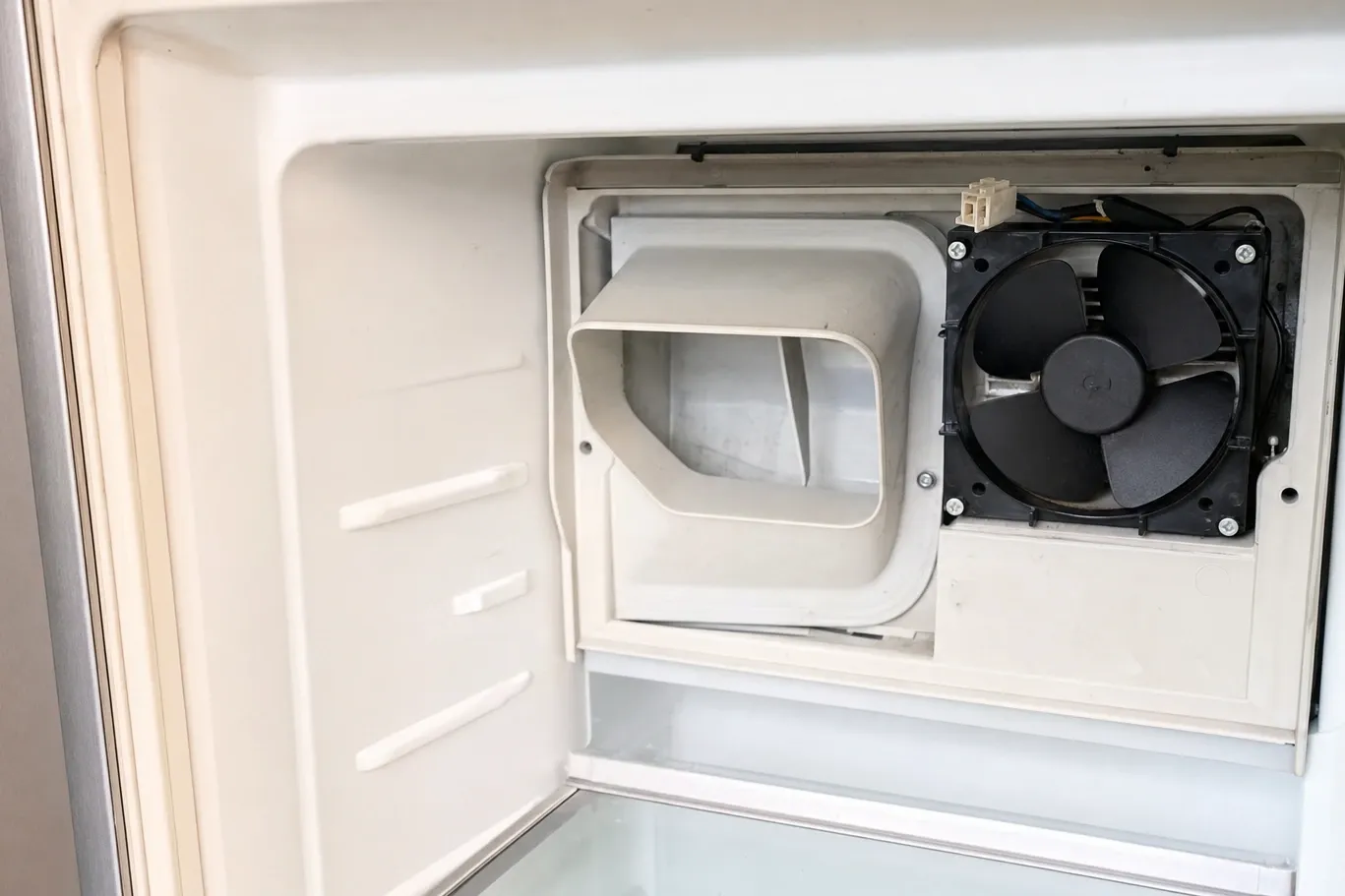 Freezer Repair Freezer columns, drawers and undercounter compartments: frost that keeps coming back, a defrost cycle that has stopped running, an iced evaporator and the slow refrigerant loss that hides behind all three.
 - A wall of frost at the back of the compartment within days of the last time it was cleared
- Ice cream going soft while the panel still insists on 0°F
-
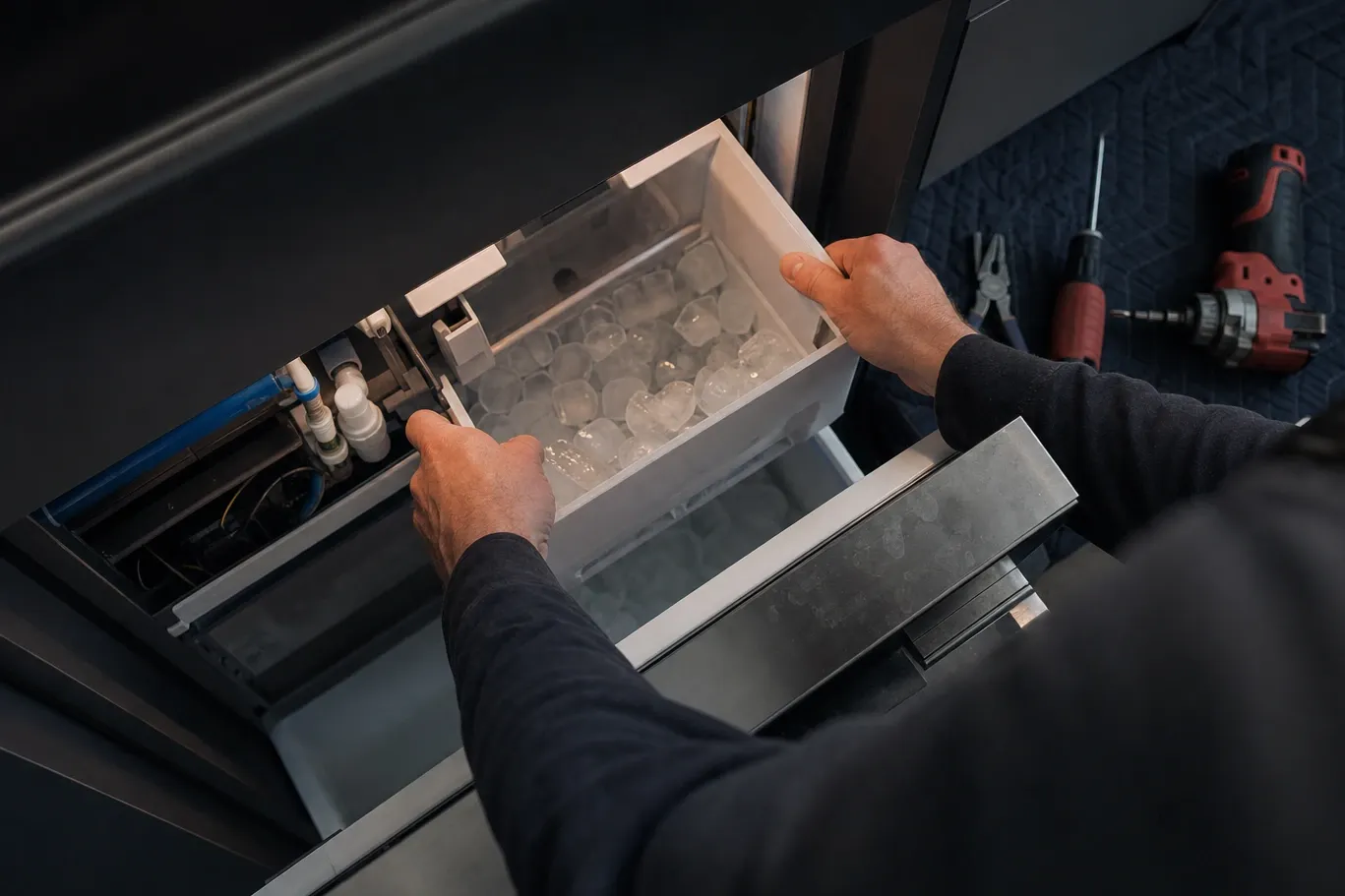 Ice Maker Repair Clear-ice and standard modules, plus everything upstream of them — filters, inlet valves, saddle taps and the long runs of supply line a high-rise kitchen hides inside a wall.
 - Empty bin for days on end with the arm down and the rest of the cabinet fine
- Cubes that come out hollow, small or cloudy and slump into each other in the bin
-
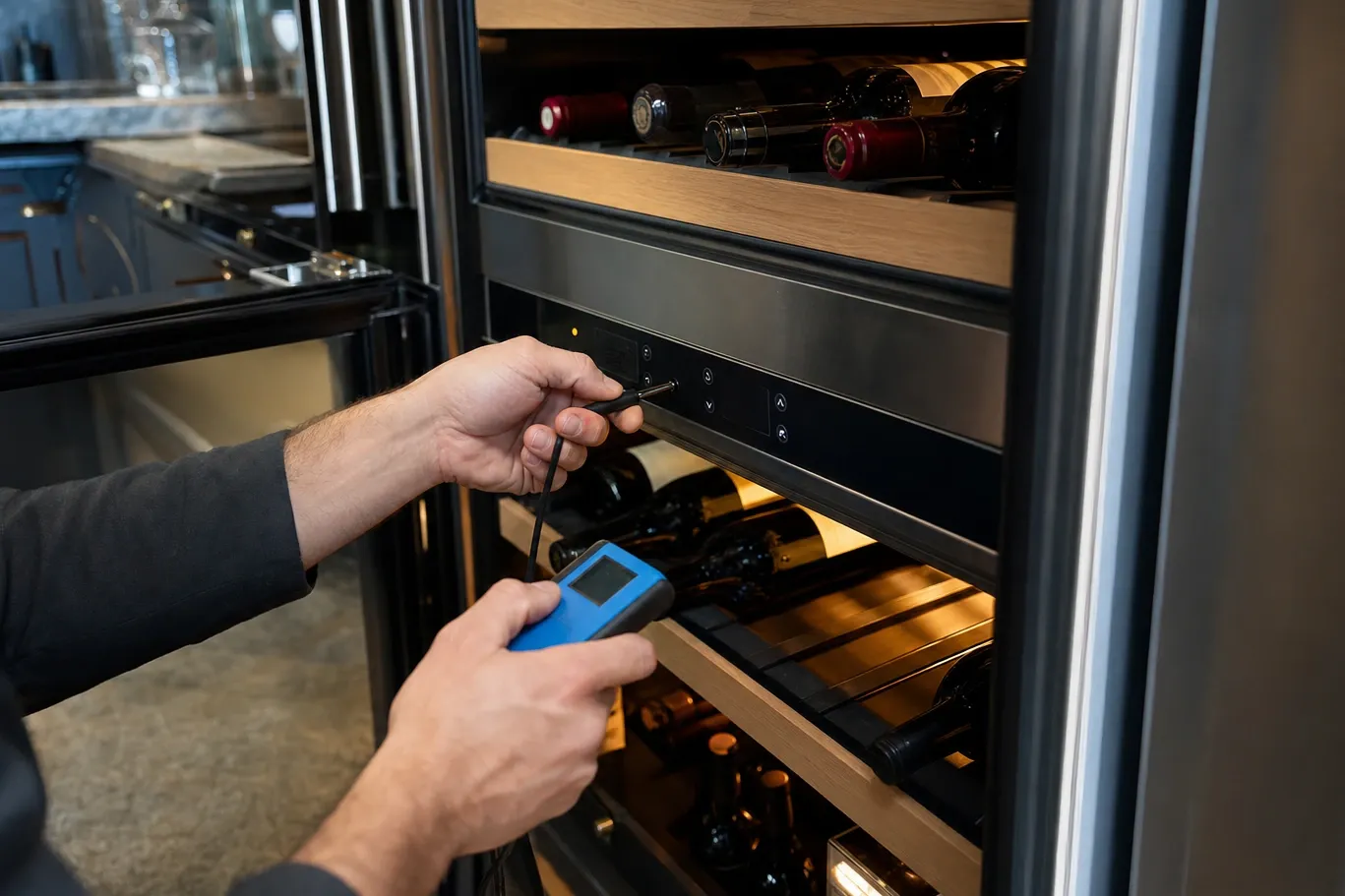 Wine Storage Repair Dual-zone wine columns and undercounter cabinets where one zone has drifted, the glass has started sweating, or the whole thing has quietly settled on a single temperature — the failure a collection notices last.
 - Both zones settling on one reading no matter what the setpoints are changed to
- Condensation beading on the inside of the glass door through a humid week
Before you call
The questions that come up on the phone
- How quickly can someone actually reach a lakefront building?
- Lincoln Park, Lakeview East, the Gold Coast and Streeterville sit on one north-side loop, so a call placed in the morning is usually seen that afternoon. The honest constraint in this coverage area is not distance, it is the building: freight elevator windows, a certificate of insurance on file with the management office, and a loading dock that closes at five. Tell us the building when you book and dispatch handles that part before the visit rather than on the doorstep.
- The fridge side is warm but the freezer is still frozen solid. Is the compressor gone?
- Almost never. These built-ins run dual refrigeration — two separate cooling circuits with their own evaporators — so a warm fresh-food column next to a freezer holding 0°F is the clearest possible sign that only one of the two circuits is in trouble. That points at the evaporator fan, the defrost circuit, a thermistor or an airflow blockage on that side. It is a repair, and the diagnosis is usually quick.
- Does Chicago weather actually do anything to these cabinets?
- It exposes them rather than damages them. Two swings matter here. A humid stretch in July and August pushes any marginal door seal or anti-condensation heater into visible sweating, and it loads the defrost system on every compartment that is opened often. Then the heat comes on in October, the apartment goes dry, and cabinets that have been running hard all summer show up the condenser that has not been cleared in years. Most sudden winter failures were already in progress in August.
- The kitchen is on the nineteenth floor. Does that change anything?
- It changes the logistics, not the repair. A column cannot be rolled out to a driveway here, so the work happens in place: panels off in the kitchen, the cabinet walked out on the hardware only if it genuinely has to come out. Long internal supply runs also change where an ice fault gets diagnosed — the pressure at your valve is a different number to the pressure at the riser, and that is measured before anything is blamed on the module.
- Is a twenty-year-old built-in worth repairing?
- Usually yes, and the arithmetic on this page is why: the repair bands set out further down sit well under the cost of a comparable replacement, and that replacement figure is before anyone touches the cabinetry that was built around the old cabinet. Parts for the widespread model families are still available. When a unit has genuinely stopped being worth repairing, we say so on the visit and you still get the written diagnosis.
- What does the visit cost, and does it come off the repair?
- The service call is a flat fee covering the visit and the full diagnosis, and it is credited against the repair in full once you approve the work. You get a firm price for parts and labour before anything is ordered or any panel comes further off. Nothing is replaced on suspicion.
- When do you work, and when is the phone answered?
- On site 8:00 am to 8:00 pm, seven days. Dispatch is a separate line and is answered around the clock, so a failure at two in the morning gets logged with the fault, the model and the building, and goes into the first working window instead of a voicemail box.
- What is on the van, and what has to be ordered?
- Common failure items travel with us: evaporator and condenser fan motors, defrost heaters, thermistors, door gaskets, water inlet valves and control boards for the widespread families. Sealed-system components are ordered against your specific serial. Guessing at a sealed-system part is how one visit turns into three.
What it costs
Bands now, a firm number before the work
Flat $89 service call covering the visit and full diagnosis, credited against the repair once you approve it.
| Repair | Typical range, parts and labour |
|---|---|
| Door gasket or seal replacement | $290–$650 |
| Evaporator or condenser fan motor | $320–$710 |
| Defrost heater, thermostat or sensor | $270–$670 |
| Ice maker, water valve or supply line | $280–$850 |
| Electronic control board | $410–$990 |
| Compressor or sealed-system repair | $1,460–$3,360 |
A repair is quoted as one figure covering parts and labour, agreed with you before a panel comes further off or a part is ordered. Where a job lands inside its band depends on the part your serial takes and how far the cabinet has to be stripped — and the $89 you paid for the visit comes off that figure the moment you approve the work.
For scale — a comparable built-in replacement, before installation and cabinetry work — runs $12,430–$21,780. That is the number the bands above are worth reading against, and it is why a sealed-system or control repair is still the sensible answer on most of the cabinets we are called to.
Before and after
What has to be true before we pack up
A cabinet that is running is not the same as a cabinet that is holding. These are the pairs that get demonstrated before anyone packs up — the left-hand state is what we were called to, the right-hand state is what has to be true before the visit is finished.
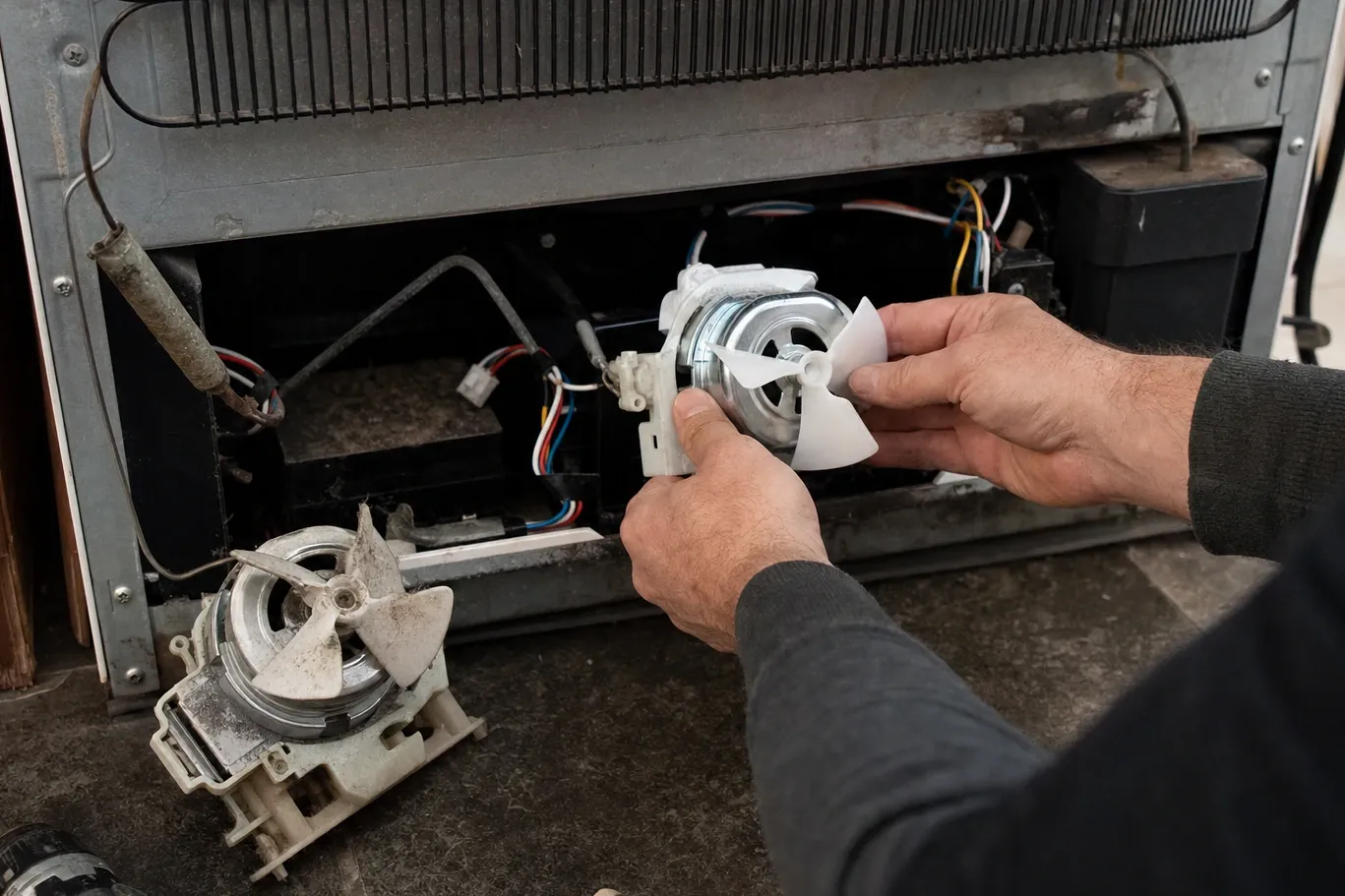
- Called about Fresh-food column drifting up through the forties overnight, freezer side unaffected. Left as Both circuits pulled back to spec and logged at the shelf, not read off the panel.
- Called about Frost rebuilding across the rear wall within a week of the last time it was cleared. Left as A full defrost cycle run through and watched, with the drain proved clear at the pan.
- Called about Condenser fan blades furred with dust, motor drawing badly and running hot. Left as Motor replaced with the factory part, current draw measured and the old one left with you.
- Called about Ice bin empty for days, arm down, module blamed by everyone who has looked at it. Left as Fill volume timed over a complete harvest and the supply pressure read at the valve.
- Called about Door standing a finger-width proud of the frame, seal cold and stiff along the top. Left as Gasket seated, hinge and closer set, and the door shown closing itself from open.